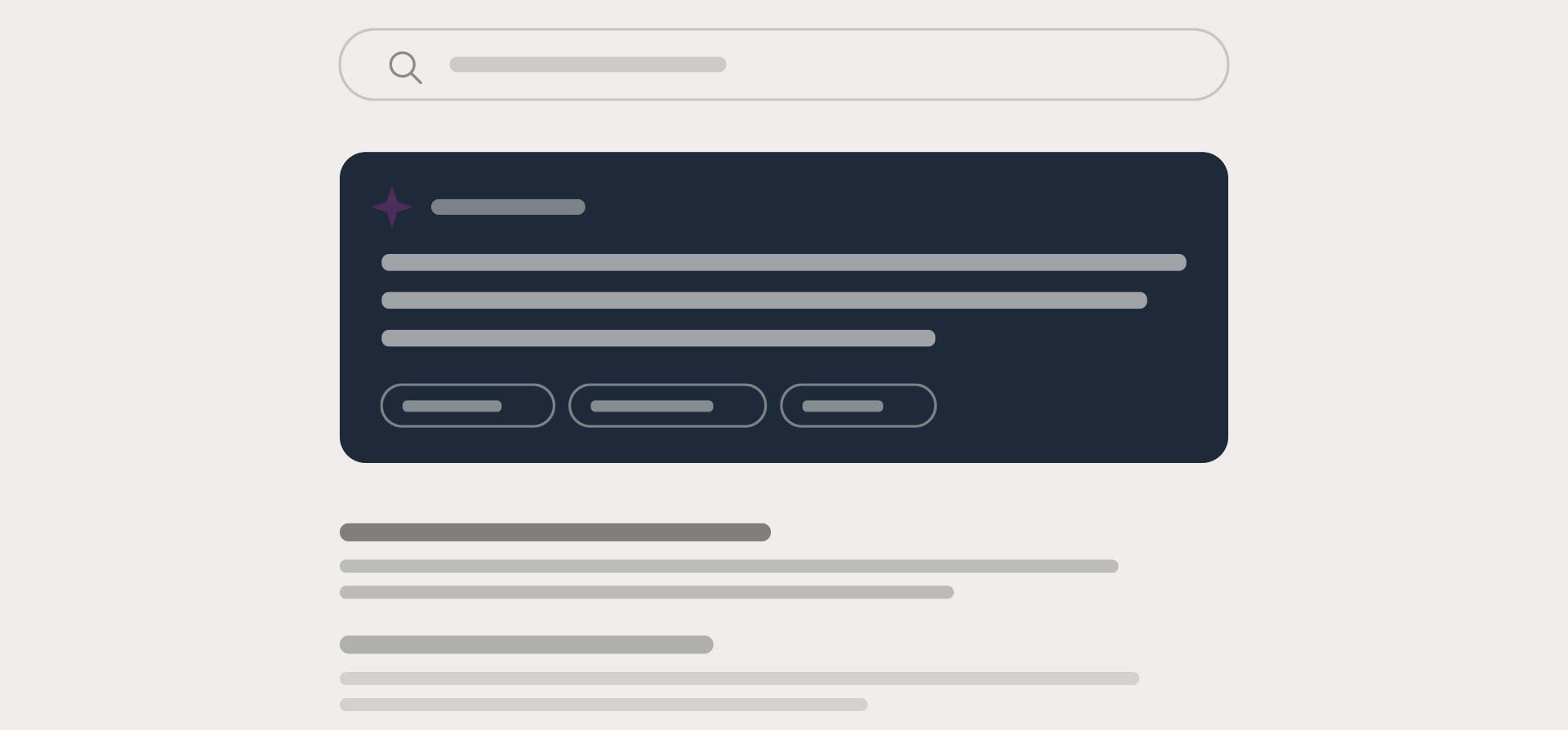

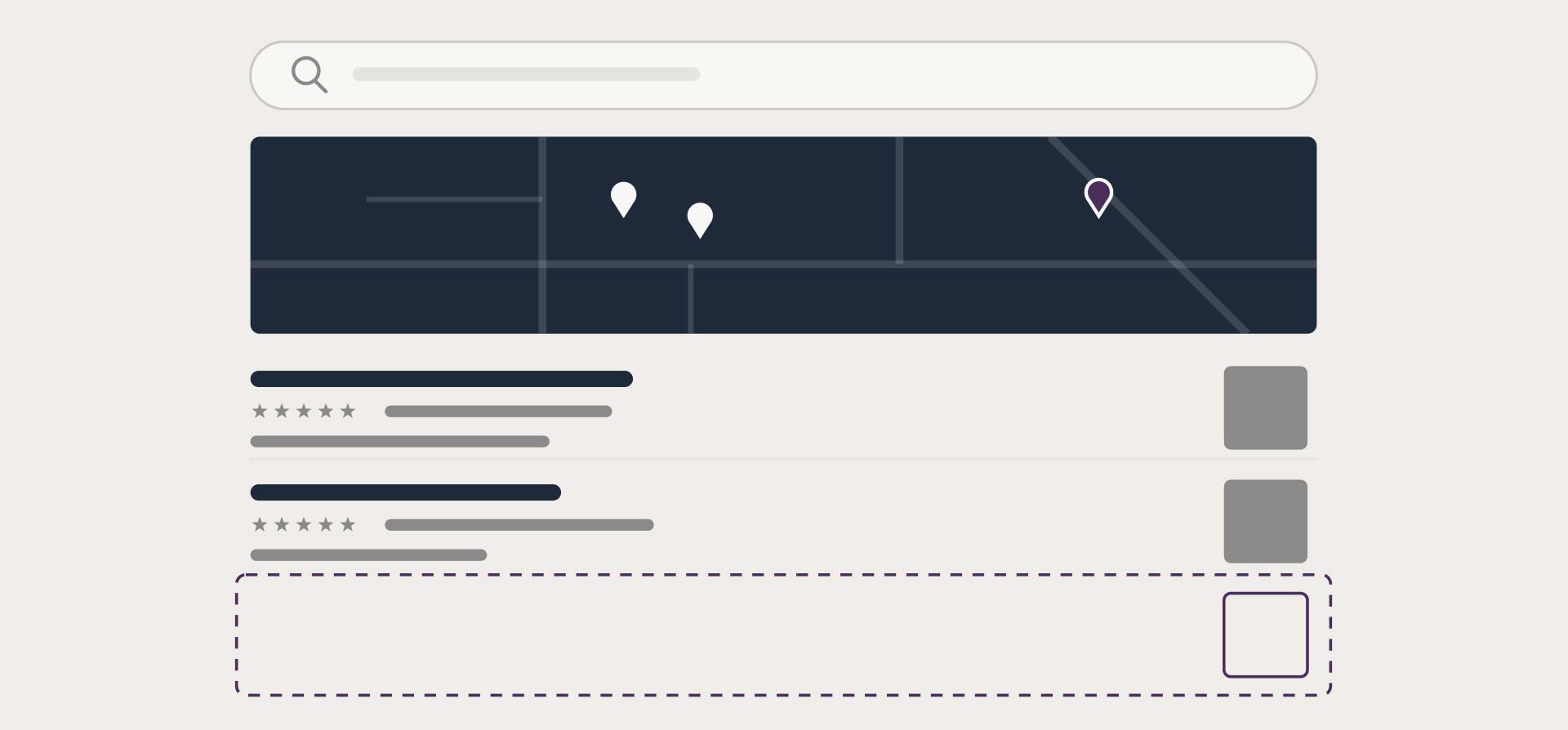
You know the search. Someone is two streets away at half twelve, phone in hand, typing lunch near me. Three places come up. You’re not one of them.
It’s maddening, because nothing tells you why. Google doesn’t explain the omission, and most of the advice you’ll find is either vague encouragement about engaging with your community, or a sales pitch with a diagnosis attached.
It’s almost always one of six things, and they aren’t equally likely. What follows is the order I’d check them in, commonest first. Each one has a test you can run in about two minutes, on the phone you’re already holding.
1. You never claimed the profile
The most common cause, and the easiest to miss, because it doesn’t look like a problem.
Google builds listings by itself, using phone directories, delivery apps and other people’s mentions of you. So there may well be a listing for your cafe that you never created.
An unclaimed listing is a weak one. Google shows it with less confidence, you can’t correct anything on it, and if the details came off a takeaway app in 2019, they’re probably wrong.
2. Your primary category is wrong
Your primary category decides which searches you’re allowed to appear in at all. It’s also the setting most owners pick once, in a hurry, on the day they set the profile up.
Cafe, coffee shop, sandwich shop, bistro and restaurant are separate categories, and Google treats them separately. If you serve a proper lunch but you’re filed as a coffee shop, you’re competing for coffee searches and sitting out the lunch ones. Secondary categories help a little. Adding fifteen of them helps less than none.
3. Google thinks you’re closed
Maps filters hard on whether you’re open right now. If your hours say you shut at four and someone searches at half past, you aren’t ranked lower. You’re removed from the results.
That’s the right behaviour when your hours are correct. When they’re wrong, it hides you during the hours you’re actually open.
Hours go wrong in ordinary ways. You changed your closing time over summer and never updated the profile. Bank holidays aren’t set, so Google shows a warning that your hours might differ, which puts people off on exactly the days you’re busiest. You’ve been doing Sunday roasts for two years and the profile still says Sunday closed.
Profiles also get flagged as temporarily closed in error. It’s rare, but it makes you invisible until you clear it, so it’s worth ruling out.
4. You’re too far from where they’re standing
This is the one nobody tells owners, and it’s why the rest of the advice can fail even when you’ve done it all.
Google names three things behind local rankings: relevance, distance and prominence. Distance is the plain one. It means how far you are from the person searching, and if they haven’t shared their location, Google works from what it knows about it anyway.
So when someone types lunch near me, the question being answered is mostly about distance. If you’re a mile from the high street where everyone is standing at lunchtime, you won’t come up for a generic near me search from there, however good your profile is. You can’t fix that, so it’s worth knowing which searches are actually available to you.
You won’t win lunch near me from across town. You can win lunch in [your part of town], vegan lunch [your town], dog friendly cafe [your town], and anything else where the searcher has named your area or already decided to travel. Those searches are worth more anyway, because the person doing them has made a choice rather than taken the nearest option.
5. Your reviews are thin, or old
Reviews feed into what Google calls prominence, meaning how well known a business appears to be. Both the number of reviews and the star rating count towards it. What neither captures is recency, which is the thing customers notice first.
Twelve reviews averaging 4.9 sounds healthy until you spot that the most recent is from 2023. To a customer that reads as a place that might not be there any more. To Google it’s a business with no recent sign that anyone goes. Meanwhile the chain two doors down has four hundred reviews, thirty from last month, and a reply under every one.
Replies matter more than owners expect, and not because there’s a ranking bonus for politeness. A profile where the owner answers is one that’s obviously being looked after, and it’s your only chance to put your own words next to somebody’s complaint.
6. Your website gives a machine nothing to read
Your profile and your website are meant to back each other up, and on a lot of hospitality sites the website has nothing on it that can actually be read.
The usual culprits. The menu is a PDF, or a photograph of a printed menu, so none of the dishes exist as text. The address sits inside an image in the footer. The opening hours are on Instagram and nowhere else. And there’s no structured data, which is a small block of code that tells Google plainly that this is a restaurant, in this postcode, serving this kind of food at this sort of price.
None of that stops a human. All of it stops a machine.
What changes when the search happens inside ChatGPT
More of these searches are now happening away from Google altogether. BrightLocal’s 2026 survey found the share of people using AI tools to find local businesses went from 6% to 45% in a year, while Google’s share of local discovery fell from 83% to 71%. That’s 1,002 US adults, so read it as a direction of travel rather than a British figure. The direction looks right to me.
The useful part is that it doesn’t hand you a second job. The assistants are reading the same things you’ve just fixed. Yext looked at 6.8 million citations across 1.6 million AI answers from Gemini, OpenAI and Perplexity, and split the results by industry. For food service, listings were the biggest single source at 41.6%, and reviews and social came in at 13.3%, higher than any other industry they looked at. Yext sells listings management software, so they have an interest in that answer. It matches what I see, but you should know who paid for the research.
What it means for a cafe is this. Your profile and your reviews aren’t only how Google finds you. They’re the material an assistant is working from when someone asks where’s good for lunch round here, and a neglected profile produces a worse sentence about you in somebody else’s answer.
Where to start
Claim the profile today, because verification takes days and everything else waits on it. Fix the category and the hours this week, because those two are the likeliest to be quietly removing you from searches you should be winning. Then start asking for reviews properly. That’s the slow one, and it never stops.
If you’d rather someone just looked, send me your business name and postcode and I’ll tell you which of the six it is. No obligation and no report to sit through, just an answer.